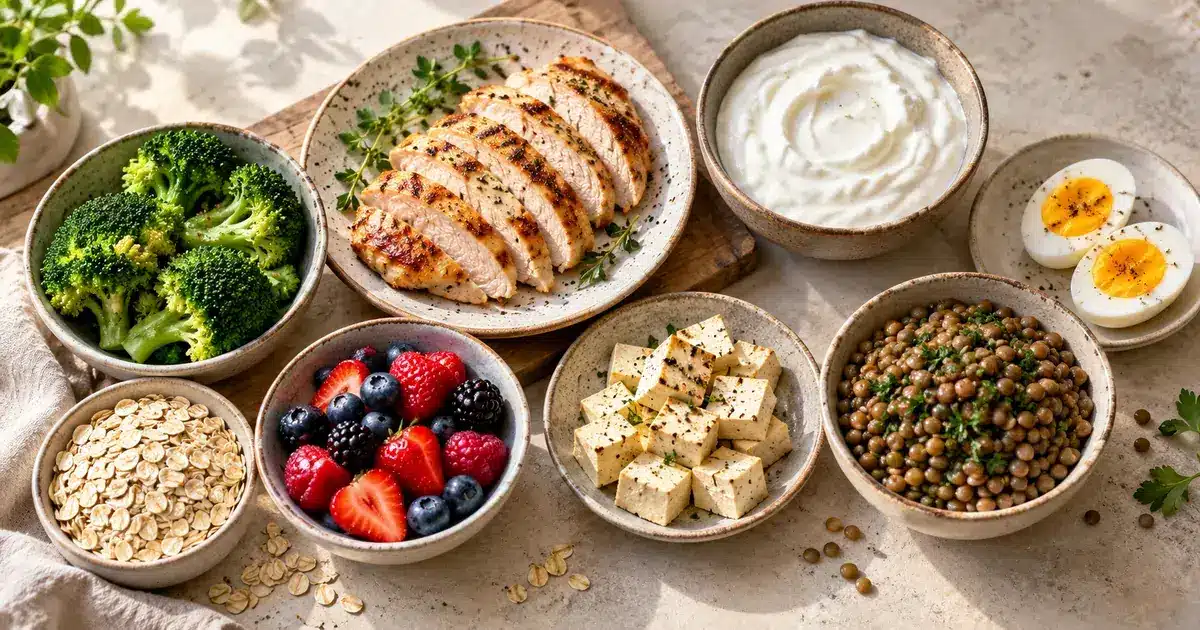
Chicken, fish, eggs, Greek yogurt, tofu, beans, and lentils can all fit into a muscle-building diet. The useful question is how much to put on your plate and how to turn those foods into meals you can repeat.
You do not need a fridge full of specialty products. Start with a few protein sources you enjoy, add carbohydrates and vegetables, and adjust portions to your needs.
This guide brings together everyday foods for muscle growth, approximate protein portions, affordable swaps, and a sample day of eating. Use it alongside a consistent strength-training routine.
How Much Protein Do You Need to Build Muscle?
The International Society of Sports Nutrition position stand gives 1.4–2.0 grams of protein per kilogram of body weight per day as a range sufficient for most exercising adults. That is approximately 0.6–0.9 grams per pound.
For someone weighing 75 kg, or about 165 lb, that works out to 105–150 grams daily. This is a general planning range, not a requirement to hit the highest number.
Protein supplies amino acids used to build and maintain muscle. Resistance training provides the stimulus for adaptation. Eating additional protein cannot replace that training.
Divide your daily amount across meals in a way that fits your schedule. For example, four eating occasions, each averaging 30 grams, would provide 120 grams. They do not need to be identical.
If you have a prescribed protein restriction, use the target agreed with your clinician or dietitian rather than this general range.
Foods for Muscle Growth: A Practical Protein Table
| Food | Portion | Approximate protein |
| Skinless chicken breast | 100 g cooked | 31 g |
| Salmon | 100 g cooked | 22-25 g |
| eggs | 2 large | 12-13 g |
| Plain Greek yogurt | 200 g | 18-20 g |
| Cottage cheese | 150 g | 17-20 g |
| Firm tofu | 150 g, drained | 15-26 g |
| Tempeh | 100 g | 19-20 g |
| Edamame | 1 cup, about 155 g | 18 g |
| Lentils | 1 cup, about 198 g | 18 g |
| Black beans | 1 cup, about 170 g | 15 g |
| Dairy Milk | 1 cup, about 240ml | 8 g |
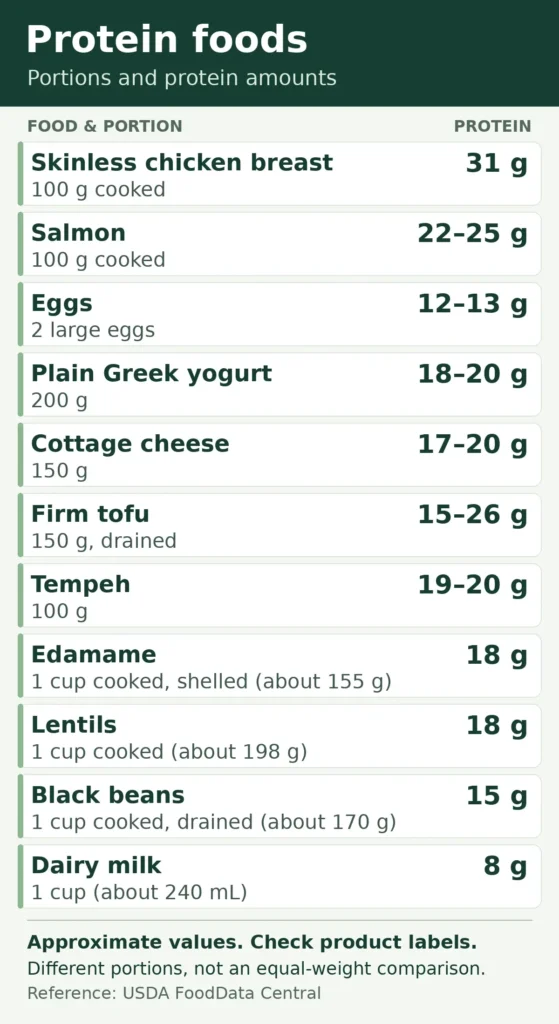
Use the table as a starting point for planning, then check your food labels. Protein varies by brand, cut, water content, and preparation method.
Meat and fish weights below are cooked weights. Lentils, beans, and edamame are cooked; beans are drained, and edamame is shelled. A 100 g portion is approximately 3.5 oz by weight.
These are rounded reference estimates using typical food composition values from USDA FoodData Central. Tofu and dairy products vary substantially, so the package label is the better guide for the product you buy. The listed portions are comparison amounts, not mandatory serving sizes.
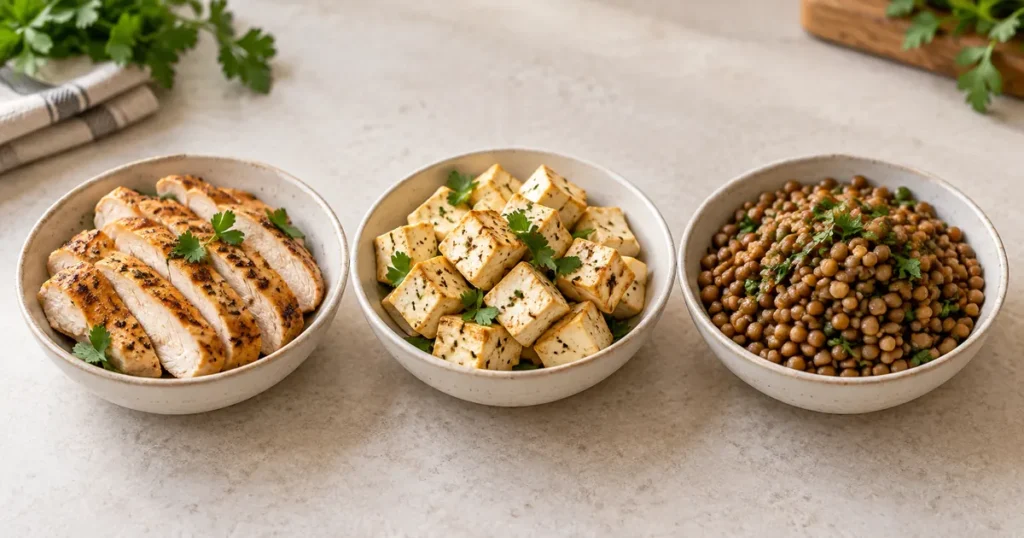
Choose protein foods you enjoy, then check the amount in your usual portion.
If you are unsure what a 100 g portion looks like, a digital kitchen scale can help you check it. Weigh the food in the same state as used in the table, such as cooked chicken rather than raw chicken.
As an Amazon Associate I earn from qualifying purchases.
View the Etekcity kitchen scale on Amazon
Chicken, Fish and Eggs
Choose these according to taste, price and convenience. Cooked chicken works in rice bowls, sandwiches and wraps. Fish can be paired with potatoes or pasta. Eggs make a quick breakfast or lunch.
Two eggs provide roughly 12–13 grams of protein. If that falls short of your planned meal, add yogurt, milk, beans, or egg whites rather than assuming two eggs must cover it.
Keep some variety in your shopping. You do not need to eat chicken at every meal, and salmon is not the only useful fish.
Greek Yogurt and Cottage Cheese
These are useful when cooking time is limited. Pair yogurt with oats and fruit, or serve cottage cheese with toast and sliced tomatoes.
Check the label rather than relying on words such as “Greek-style” or “high protein.” Compare equal amounts of each product, since different tub sizes can make the protein numbers look misleading.
Choose the fat level and flavor you enjoy as part of your overall eating pattern. Plain versions also work in savory sauces and dips.
Tofu, Tempeh, Beans and Lentils
USDA MyPlate includes soy foods, beans, peas, and lentils among protein-rich food choices. They offer plenty of ways to build meals without meat.
For example, use tofu in a stir-fry, tempeh in a sandwich, or lentils in a rice bowl. Beans can turn a simple wrap into a more substantial lunch.
Check tofu labels carefully. Two blocks of the same weight may contain different amounts of protein because their water content differs. If your usual portion provides less than expected, increase it or add edamame or beans.
Nuts and seeds can also contribute protein, but compare their actual portions to the table. A small sprinkle is an addition to a meal, not automatically its main protein source.
Build a Meal You Can Repeat
Use four components to make planning easier:
- Protein: chicken, fish, eggs, dairy, tofu, tempeh or legumes.
- Carbohydrate: rice, oats, potatoes, pasta, bread or another grain.
- Produce: vegetables or fruit you enjoy.
- Flavor and fat: olive oil, nuts, seeds, avocado, dressing or sauce as appropriate.
You do not need a rigid percentage split for every plate. Portions depend on your appetite, body size, activity, and goals.
Three repeatable combinations are chicken with rice and broccoli, tofu with noodles and mixed vegetables, and lentils with quinoa and roasted carrots. Change the seasoning before replacing the whole meal plan.
Keep the preparation realistic. Microwave rice, frozen vegetables, and canned beans can make a useful dinner when you have little time or energy to cook.
A Sample Day With About 112 Grams of Protein
This example shows how protein can add up over the course of normal meals. It is not a personalized calorie prescription or a complete nutrition plan. Adjust the food amounts, fruit, fats, and extra snacks to your needs.
The calculations use representative label values. Your totals will change when you choose different products.
Breakfast: Yogurt and Oats
Combine 200 g of Greek yogurt with 40 g of dry oats and some berries.
Using yogurt with 10 g of protein per 100 g gives 20 g. The oats add approximately 5 g.
Counted protein: about 25 g, excluding the small contribution from berries.
Lunch: Chicken and Rice Bowl
Serve 100 g of cooked chicken breast with 1 cup of cooked rice and vegetables.
Count approximately 31 g from the chicken, 4 g from the rice, and 2 g from the vegetables. Add dressing or oil to suit your meal.
Estimated protein: about 37 g.
Snack: Cottage Cheese and Fruit
Have 150 g of cottage cheese with fruit or sliced vegetables.
Using a product with 12 g of protein per 100 g gives 18 g, excluding the small contribution from the accompaniment.
Dinner: Tofu and Quinoa Bowl
Combine 150 g of firm tofu with 1 cup of cooked quinoa and mixed vegetables.
For this example, choose tofu labeled 14 g of protein per 100 g. That gives 21 g, with approximately 8 g from quinoa and 3 g from vegetables.
Estimated protein: about 32 g.
The counted total is 25 + 37 + 18 + 32 = 112 grams. This falls within the earlier example range for a 75 kg adult, but it will not be the right amount for everyone.
A larger or smaller yogurt serving is easier to account for than replacing every meal.
To adapt the day, change one portion at a time. For a plant-based version, use labelled soy alternatives and replace the chicken with tofu, tempeh, or legumes, then recalculate the total.
Affordable Foods and Simple Shopping Swaps
Build your shopping list around foods you will actually use. A bargain that sits untouched in the fridge does not save money.
- Protein staples: choose three or four from eggs, yogurt, chicken, tofu, lentils, beans and canned fish.
- Carbohydrate staples: choose two or three from oats, rice, potatoes, bread and pasta.
- Produce: buy a manageable amount of fresh fruit and vegetables, plus frozen options for later.
- Flavor: keep a few seasonings, sauces, or dressings on hand to make repeat meals more enjoyable.
Compare local unit prices. Dried legumes can be economical when you have time to cook them, while canned versions save preparation time. Larger yogurt tubs may cost less per serving, but only if you finish them.
Chicken thighs can replace breast when you prefer the price or flavor. Their nutrition differs, so update your estimate rather than copying the breast value from the table.
For a simple shopping comparison, divide the package price by the number of portions you expect to eat. This makes the real cost of a meal easier to see than the shelf price alone.
Meal Prep Without Eating the Same Dinner All Week
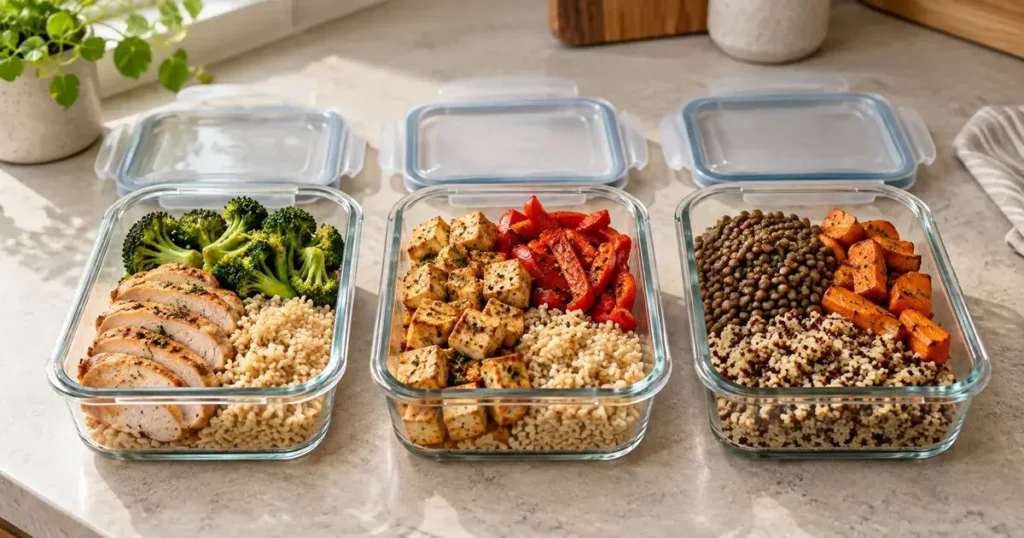
Prepare a few ingredients, then change the combinations and seasonings.
Prepare components rather than seven identical meals. Cook a protein, a grain, and vegetables, then combine them in different ways over the next few days.
Chicken and rice can become a bowl one day and a wrap filling the next. Lentils can go into a soup or a salad. Keep sauces separate so you can change the flavor at serving time.
If you need containers for prepared lunches, Rubbermaid Brilliance glass containers are one option to compare. Choose a capacity that fits your usual meals and follow the manufacturer’s storage and reheating instructions.
View Rubbermaid glass meal-prep containers on Amazon
Store food safely. USDA guidance generally allows 3–4 days for cooked leftovers in the refrigerator. Refrigerate promptly in shallow containers and freeze portions intended for later. Reheat leftovers to 165°F (74 °C).
One workable routine is a short preparation session on Sunday and another on a midweek day. Keep a quick backup meal available, such as eggs on toast, yogurt with oats, or beans with microwave rice.
For more ideas centered on recovery, see our guide to foods for muscle recovery.
Do You Need Protein Powder?
Protein powder is optional. It can be convenient when your usual meals leave a gap, but it does not need to replace them.
If you decide a powder would be convenient, Optimum Nutrition Gold Standard 100% Whey is one option to compare. Check the selected flavour’s ingredients, allergens, serving size and cost per serving. Whey is milk-derived, and a supplement remains optional.
Check the Optimum Nutrition Gold Standard Whey Pricing
Try the food plan first. You may find that a more substantial breakfast or a prepared lunch solves the problem without another product.
Keep Food and Training Working Together
Record a few days of normal eating to identify the meal most worth improving. Perhaps breakfast contains little protein, or lunch gets skipped when work is busy. Make that meal more reliable before adding complicated rules.
Alongside your food routine, use a training plan you can follow and progress over time. Our guide to choosing a bodybuilding program explains how different training splits fit different schedules.
Review your eating routine alongside your training log, energy, and longer-term progress. Avoid judging a food choice by one workout or expecting a visible change after a few days.
Frequently Asked Questions
Which foods build muscle the fastest?
There is no single fastest muscle-building food. Choose protein sources you can eat consistently, build balanced meals around them, and follow a suitable resistance-training program.
Can I build muscle without eating meat?
Yes. Plan around protein sources such as tofu, tempeh, edamame, lentils and beans. Eggs and dairy are also options for vegetarians who eat them. Check portions and total intake rather than assuming a meat-free meal is automatically high in protein.
Does protein from rice, oats and vegetables count?
Yes. Their protein contributes to your daily total. Just use realistic amounts: a cup of cooked rice and a small garnish of vegetables do not provide the same protein as a substantial serving of chicken or tofu.
Should I eat protein on rest days?
Yes. Continue your usual protein-containing meals on rest days. Recovery continues between workouts, so protein is not only something to think about immediately after lifting.
Do I need to eat immediately after a workout?
For most recreational lifters, meeting daily protein needs matters more than rushing to eat within a few minutes. A normal protein-containing meal after training is practical; timing also depends on when you last ate.
What is the easiest place to start?
Choose one breakfast, one lunch and two dinners from foods you already enjoy. Check their portions, write a short shopping list and repeat the meals for a week. Adjust what proves inconvenient before adding more variety.