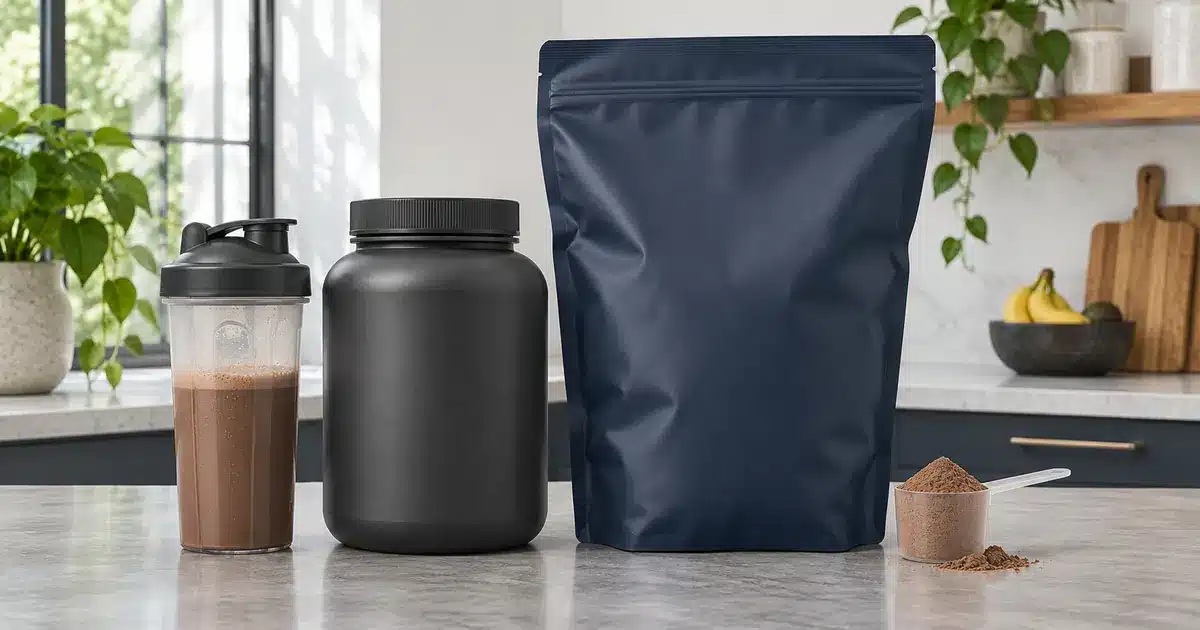
Both packages say Gold Standard, and both can go in a shaker. The difference is what you need the shake to add. If your meals already cover your calories and you’re short on protein, start with Gold Standard Whey. If you regularly come up short on both, compare Pro Gainer with the food or homemade shake you could use instead. Understanding the differences is essential when considering gold standard whey vs pro gainer.
The quick answer: A labeled serving of Double Rich Chocolate Whey gives you 24 g of protein for 120 calories. A labeled serving of Double Chocolate Pro Gainer gives you 60 g of protein and 650 calories. Match the serving to what’s missing from your meals before you buy either package, especially when looking at gold standard whey vs pro gainer.
How we compared them: This is a label-based buying guide. We have no head-to-head testing for taste, mixing, digestive comfort or training results. The images are AI-generated editorial illustrations.
When evaluating your protein needs, consider the debate of gold standard whey vs pro gainer.
Affiliate disclosure: As an Amazon Associate, I earn from qualifying purchases. If you buy through an affiliate link, the site may earn a commission at no extra cost to you.
Gold Standard Whey vs Pro Gainer at a Glance
These figures compare two U.S. chocolate-flavor labels. They describe dry powder before adding milk or other ingredients. The serving counts are for the example packages and can differ from the Amazon listings.
| Per labeled serving | Gold Standard Whey Double Rich Chocolate | Gold Standard Pro Gainer Double Chocolate |
|---|---|---|
| Powder weight | 31 g | 165 g |
| Calories | 120 | 650 |
| Protein | 24 g | 60 g |
| Carbohydrate | 3 g | 81 g |
| Total fat | 1.5 g | 9 g |
| Dietary fiber | Less than 1 g | 5 g |
| Total sugars | 1 g | 7 g |
| Declared allergens | Milk, soy | Milk, soy |
| Servings in example package | 29 | 14 |
Sources: Optimum Nutrition’s Double Rich Chocolate Whey label, Optimum Nutrition’s U.S. Pro Gainer listing and the 5.09 lb Double Chocolate Pro Gainer label reproduced by iHerb. Check the label on the exact flavor and package you buy.
When Gold Standard Whey Fits Better
Whey fits when the meal is already big enough and you want a straightforward protein top-up. For example, if your usual breakfast is oatmeal and fruit and you want to add roughly 25 g of protein, the labeled whey serving adds 24 g. You can mix it separately or stir it into food you already eat.
The checked formula lists whey isolate first in its protein blend, followed by whey concentrate and hydrolyzed whey protein. If you need extra calories as well, count the whole shake, including any milk, oats, or nut butter you add.
See our Gold Standard Whey review for a closer look at the powder, or check Gold Standard Whey Double Rich Chocolate on Amazon. Check the listed package size and serving count before comparing prices.
When Pro Gainer Fits Better
Pro Gainer is worth considering when a calorie gap keeps coming up and a drink is easier to fit into your routine. Think of a long workday when meals are already planned but you need a convenient addition between them. The checked Double Chocolate formula gets much of its carbohydrate from maltodextrin and includes an added vitamin and mineral blend.
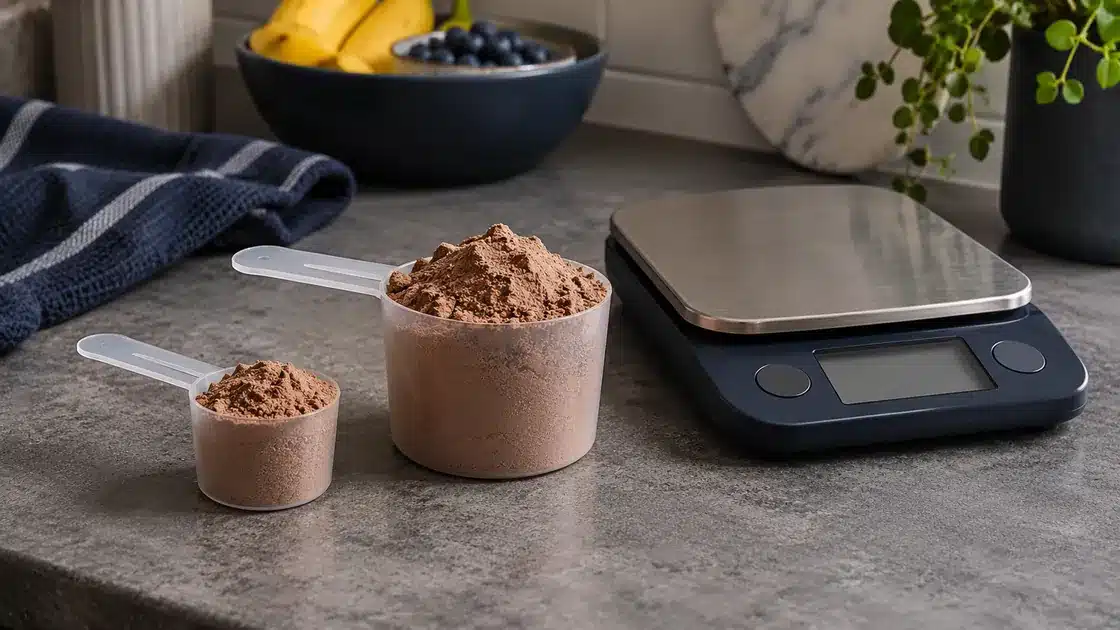
Start by matching the powder weight to the gap you want to fill. Half of the labeled 165 g portion is 82.5 g. Based on the label, that portion supplies about 325 calories and 30 g of protein before you add liquid. A kitchen scale makes it easier to repeat the portion.
See our Pro Gainer review for the full buying considerations, or check Gold Standard Pro Gainer Double Chocolate on Amazon. Verify the current flavor and size on the listing.
What Happens When You Compare Equal Protein?
The serving sizes make the 24 g and 60 g protein figures look farther apart than they need to be for a shopping decision. At 25 g of protein, the whey comes to about 125 calories and the gainer comes to about 271 calories. These are calculations from rounded label values. Use them to compare the formulas on the same basis.
For a protein gap, count what you already eat across your day, including meals and snacks. For a calorie gap, look at the full serving or recipe you would actually use. Both powders can contribute to your intake. The labels tell you how much they contribute, while your training and overall diet shape your results. See our guide to protein portions and easy meals for food options.
Ingredients, Allergens and Mixing
The checked chocolate labels both declare milk and soy. Read the package’s ingredient and allergen statement if you shop across flavors, sizes or countries. Both formulas contain dairy proteins, and the panels cited here do not quantify lactose.
Follow the mixing directions on your package. Water adds no calories to the powder. Milk adds its own protein and calories, so include it if you’re comparing the finished drink. Choose your usual mixing liquid before deciding how much powder fits your routine.
Compare Pro Gainer With a Homemade Shake

If a full gainer serving is larger than you want, compare a measured portion of Pro Gainer with a shake built from ingredients you already buy. Milk or another beverage, oats, banana and peanut butter are one starting point. Add whey if the recipe still falls short of the amount of protein you want.
Use the quantities you actually blend when estimating nutrition and cost. A packaged gainer makes the ingredient list and portion easy to repeat. A homemade shake gives you control over what goes in, with a little more preparation and cleanup.
How to Compare the Cost

Divide the delivered package price by the labeled serving count. If protein is the priority, multiply the cost per serving by 25, then divide by the protein grams per serving. If calories are the priority, multiply the cost per serving by 500, then divide by the calories per serving. Use the same currency and include delivery for both products.
For example, a hypothetical $42 bag with 14 servings costs $3 per full serving. Half a serving costs $1.50 before liquid and supplies about 325 calories. That’s an example of the calculation, so substitute the current price and the actual package count when you shop.
Which One Should You Buy?
Choose Gold Standard Whey if you want to add roughly a serving’s worth of protein with 120 calories from powder. Consider Pro Gainer if you regularly need extra calories as well as protein and its portion, ingredients and cost fit your routine.
Write down what the shake needs to add before you order. If your regular meals already cover both gaps, there’s little reason to add either powder just because it’s marketed for muscle building.