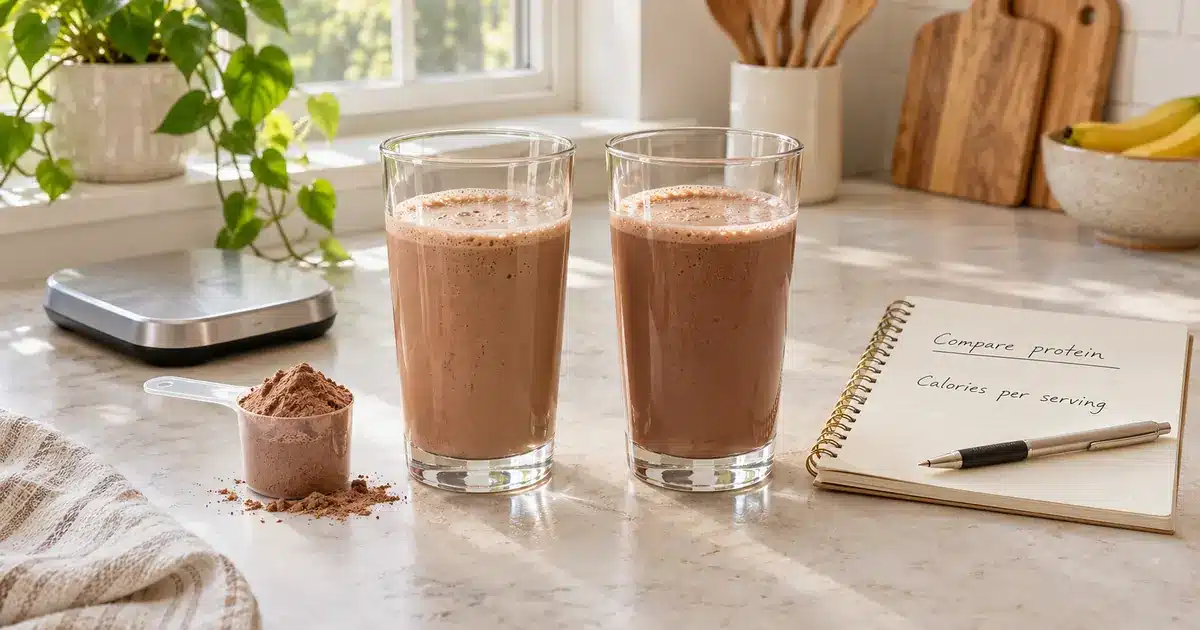
You want a protein powder that fills a gap in your meals without quietly adding more calories or cost than you planned. Gold Standard Whey vs Syntha-6 is a useful comparison because the two tubs can look like similar purchases while delivering quite different nutrition per scoop.
The quick answer: the checked U.S. Gold Standard Double Rich Chocolate label provides more protein per calorie. Original Syntha-6 Chocolate Milkshake supplies a larger serving with more carbohydrate, fat, and fiber. Your choice comes down to whether those differences fit your meals and whether the delivered price makes sense.
Comparison disclosure: This is a label-based buying comparison. We have not conducted a head-to-head test of taste, mixing, digestion, or training results. All photographs are AI-generated editorial illustrations, not product-testing evidence.
As an Amazon Associate, I earn from qualifying purchases. Affiliate links may earn a commission at no additional cost to you.
Gold Standard Whey vs Syntha-6: Quick Decision
| Your priority | Useful starting point | What to check |
|---|---|---|
| More protein within a smaller calorie allowance | Gold Standard Whey | The label for the selected flavor and your finished drink. |
| A protein blend with more calories and fiber per serving | Original Syntha-6 | Whether the extra carbohydrate, fat, and fiber suit you. |
| Lowest cost for an equivalent amount of protein | Calculate both | Use the exact container price and labeled servings. |
| A formula you enjoy and tolerate | Neither is a confirmed winner here | Start with a reasonable purchase and review ingredients. |
| Avoiding milk protein | Choose a different category | Both checked products declare milk. |
For the individual products, read our Gold Standard Whey review and BSN Syntha-6 review. This article focuses on the buying decision between them.
The Labels Compared: Use the Exact Flavors
Checked November 3, 2026: U.S. Gold Standard 100% Whey, Double Rich Chocolate, 29-serving label; and original U.S. Syntha-6, Chocolate Milkshake, 48-serving label. Figures describe dry powder alone. The different serving counts reflect different packages, not a nutritional advantage.
| Per labeled serving | Gold Standard Double Rich Chocolate | Syntha-6 Chocolate Milkshake |
|---|---|---|
| Powder serving | 31 g, about 1 scoop | 47 g, about 1 scoop |
| Protein | 24 g | 22 g |
| Calories | 120 | 190 |
| Total carbohydrate | 3 g | 14 g |
| Total fat | 1.5 g | 5 g |
| Dietary fiber | Less than 1 g | 6 g |
| Total sugars | 1 g | 3 g |
| Declared allergens | Milk, soy | Milk, soy |
Sources: Optimum Nutrition’s Double Rich Chocolate label and BSN’s Chocolate Milkshake label. Check the package you receive, especially when shopping in Canada or changing flavors. Do not substitute Syntha-6 Edge, Syntha-6 Isolate, or Gold Standard 100% Isolate for the products compared here.
Why Comparing One Scoop Can Mislead You
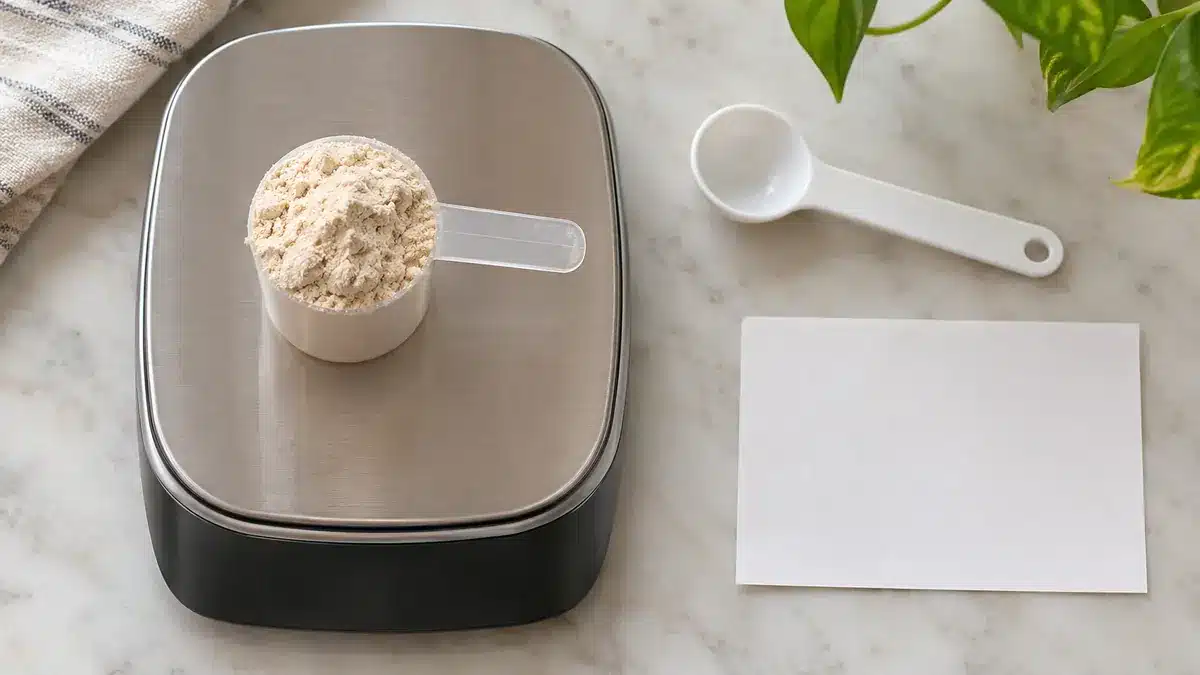
Syntha-6’s scoop contains 16 g more powder, yet the checked serving supplies 2 g less protein. The larger scoop also includes more carbohydrate, fat, and fiber. A bigger portion of powder is not automatically a bigger portion of protein.
For an equal-protein comparison, scale both labels to 25 g protein. Gold Standard works out to approximately 125 calories; Syntha-6 works out to approximately 216 calories. These are calculated comparisons from rounded label values, not separate serving recommendations or laboratory measurements.
That roughly 91-calorie difference may matter when you are trying to fit a shake into a limited calorie allowance. It may matter less when your meals leave room for the additional energy. Neither calculation tells you which drink you will enjoy.
Which Fits a Smaller Calorie Budget?
Gold Standard is the more direct starting point if the problem is, “I need convenient protein, but I do not want many additional calories.” On these labels, it supplies 24 g protein for 120 calories before you add anything else.
For example, if breakfast and lunch leave you short of your intended protein intake, compare the shake with other convenient options you would actually eat. You do not need to purchase a powder merely because you started lifting weights.
Syntha-6 can still fit into a calorie-conscious eating plan. Its 190-calorie serving uses more of that allowance for slightly less protein. Do not treat the higher fiber content as proof that it will keep you fuller; we have not compared appetite responses.
Our foods for muscle growth guide offers meal-based alternatives if another tub would be an unnecessary expense without solving a recurring problem.
When Might Syntha-6 Make More Sense?
Original Syntha-6 is worth considering if you specifically want to investigate a milk-protein blend with more energy per serving and ingredients that suit you. Its checked panel includes whey sources, caseinate, micellar casein, and milk protein isolate.
However, “I want more calories” does not by itself make Syntha-6 the better purchase. Compare the complete drink with ordinary food or a shake made from a suitable powder and other ingredients you already use. Convenience, serving cost, and personal preference still matter.
Do not assume the blend produces more muscle growth, provides a special all-day effect, or replaces a balanced meal. A label comparison cannot establish those outcomes. Choose a formula around a practical need rather than the length of its protein-source list.
Ingredients and Tolerance: Neither Is Dairy-Free
The checked Gold Standard label lists whey isolate first, followed by whey concentrate and hydrolyzed whey protein. It is a whey blend, not pure isolate. The checked Syntha-6 panel combines whey and casein-related sources and also includes polydextrose, creamer, and other ingredients.
Both panels declare milk and soy. Neither is an appropriate choice for someone avoiding milk protein. A product containing whey isolate is not automatically lactose-free, and an ingredient list alone does not tell you exactly how much lactose a serving contains.
If a particular sweetener or added fiber has caused trouble before, compare the full panel rather than relying on the brand name. Neither formula earns a universal “easier to digest” verdict from this review. When allergies affect your choice, verify the precise package and manufacturer information.
Taste, Mixing, and the Liquid You Add
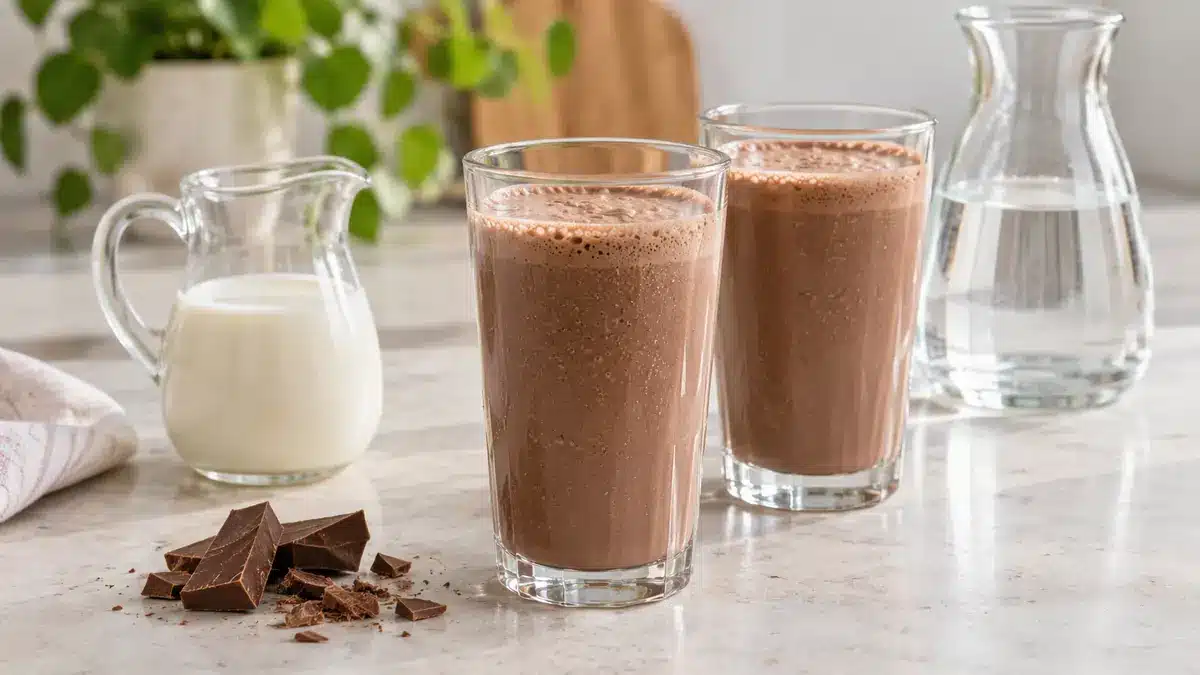
We cannot fairly name a taste champion without testing both products under the same conditions. Chocolate Milkshake and Double Rich Chocolate are flavor names, not evidence that one is creamier, sweeter, or more enjoyable.
Follow each container’s mixing directions. The checked Gold Standard panel uses 6–8 fl oz of liquid; the Syntha-6 panel uses 4–5 fl oz. Different liquid volumes make an informal comparison less useful unless you keep track of how each drink was prepared.
Milk adds its own nutrition to either powder. Water does not add calories. If you usually mix with milk, oats, or nut butter, compare the completed recipe rather than quoting the dry-powder calories as the total.
Compare Cost per 25 g Protein Before Buying.

A cheaper tub can still be more expensive per unit of protein. First calculate cost per serving: container price divided by labeled servings. Then calculate the cost per 25 g of protein: cost per serving multiplied by 25, divided by the protein grams per serving.
Here is a hypothetical example, not current product pricing. If Gold Standard costs $2.40 per serving, 25 g protein costs $2.50. If Syntha-6 costs $2.20 per serving, the same amount of protein costs $2.50. Syntha-6 looks cheaper per scoop in that example, but the protein-adjusted cost is equal.
Use one currency and comparable purchase conditions. Account for delivery charges, and distinguish a one-time price from a subscription offer. Avoid buying a large container solely because of its per-serving cost if you have not decided whether you will use it.
The linked Gold Standard Amazon offer below is a 10 lb Double Rich Chocolate option; the nutrition table above uses the checked 29-serving manufacturer panel. Confirm the current large-container label and serving count before using it for cost calculations. The Syntha-6 link is your 48-serving Chocolate Milkshake option.
Check Gold Standard Double Rich Chocolate, 10 lb on Amazon
Check Syntha-6 Chocolate Milkshake, 48 servings on Amazon
Choose Around the Gap in Your Meals
Start with Gold Standard if protein relative to calories is the deciding factor. Consider the original Syntha-6 if you want to compare its more comprehensive formula and see whether the extra calories and fiber suit your routine. Calculate value using the actual price rather than assuming either brand is cheaper.
If you already have a suitable powder you enjoy, the numbers here do not establish a reason to replace it. If you meet your protein needs comfortably through food, neither purchase may be necessary. Our muscle-building reviews guide can help put protein powders alongside other optional supplement purchases.
Frequently Asked Questions
Is Gold Standard Whey better than Syntha-6?
For protein relative to calories, the checked Gold Standard Double Rich Chocolate label has the advantage: 24 g protein for 120 calories, compared with 22 g for 190 calories in the checked Syntha-6 Chocolate Milkshake label. That does not establish better taste, tolerance, or muscle-building results.
Is Syntha-6 a mass gainer?
The original Syntha-6 version reviewed here is a protein blend. Its 190-calorie serving should not be confused with a complete meal or a guarantee of weight gain. Assess it against the actual gap in your meals.
Is Gold Standard 100% Whey a pure isolate?
No. The checked label lists whey protein isolate first, followed by whey protein concentrate and hydrolyzed whey protein. It is a whey blend, and it should not be confused with Gold Standard 100% Isolate.
Which one is cheaper?
The answer depends on the exact container and delivered price. Divide price by labeled servings, then multiply by 25 and divide by protein grams per serving to compare cost per 25 g protein.
Can I mix either powder with milk?
Both checked labels allow milk or another beverage. Milk adds its own calories, protein, and allergens, so include it when calculating the finished shake. Neither powder is suitable for someone avoiding milk protein.