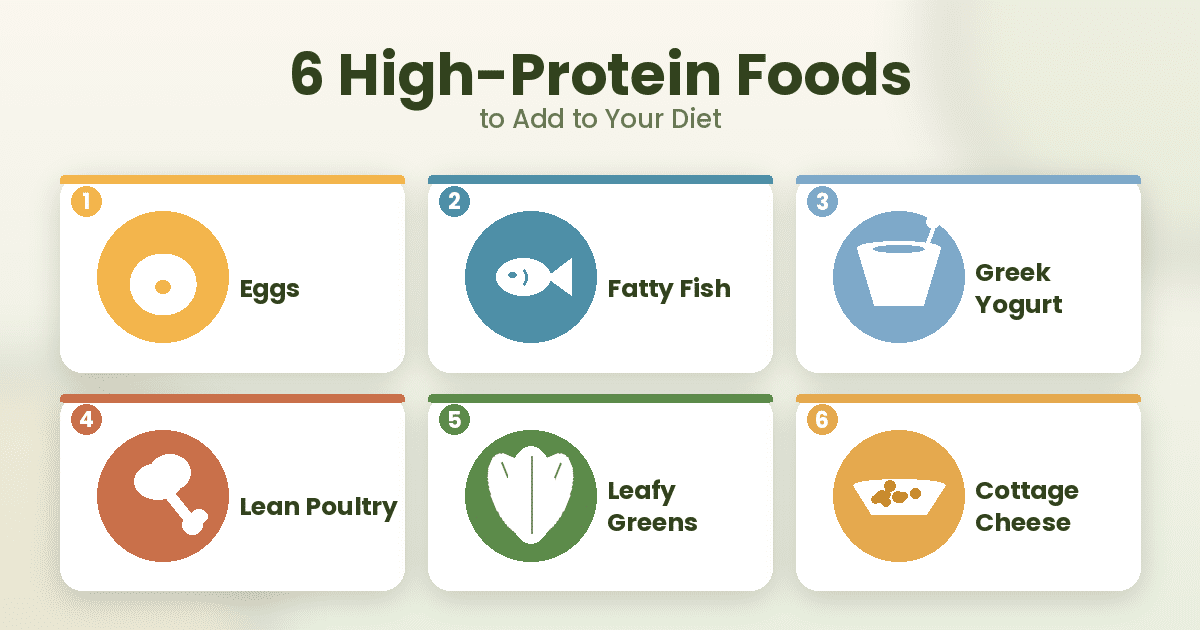
You’re training hard. You’re showing up consistently, yet the scale and the mirror barely move.
Plateaus hit hardest when nutrition falls behind. Many people focus only on progressive overload in the gym and treat food as an afterthought. The result? Slow recovery, stalled muscle growth, and frustration.
This guide is written for one reader: the intermediate lifter who has limited time to cook elaborate meals, feels confused about what actually supports muscle recovery, and wants practical foods that deliver results without turning the kitchen into a second job.
We’ll cover six foods that support muscle growth and recovery, why they matter, who benefits most, and how to start using them right away.
What Are the 6 Foods Your Muscles Love?
These six foods deliver high-quality protein, essential nutrients for repair, and compounds that reduce inflammation or support hormone balance. They are not exotic superfoods. They are everyday options that fit real life.
Listed below are:
- Eggs – Complete protein plus leucine and healthy fats
- Fatty fish (salmon or sardines) – Protein + omega-3s for recovery
- Greek yogurt – High protein with probiotics and calcium
- Lean poultry (chicken or turkey) – Affordable, versatile protein source
- Leafy greens (spinach or kale) – Micronutrients that support training adaptation
- Cottage cheese – Slow-digesting casein protein ideal for overnight recovery
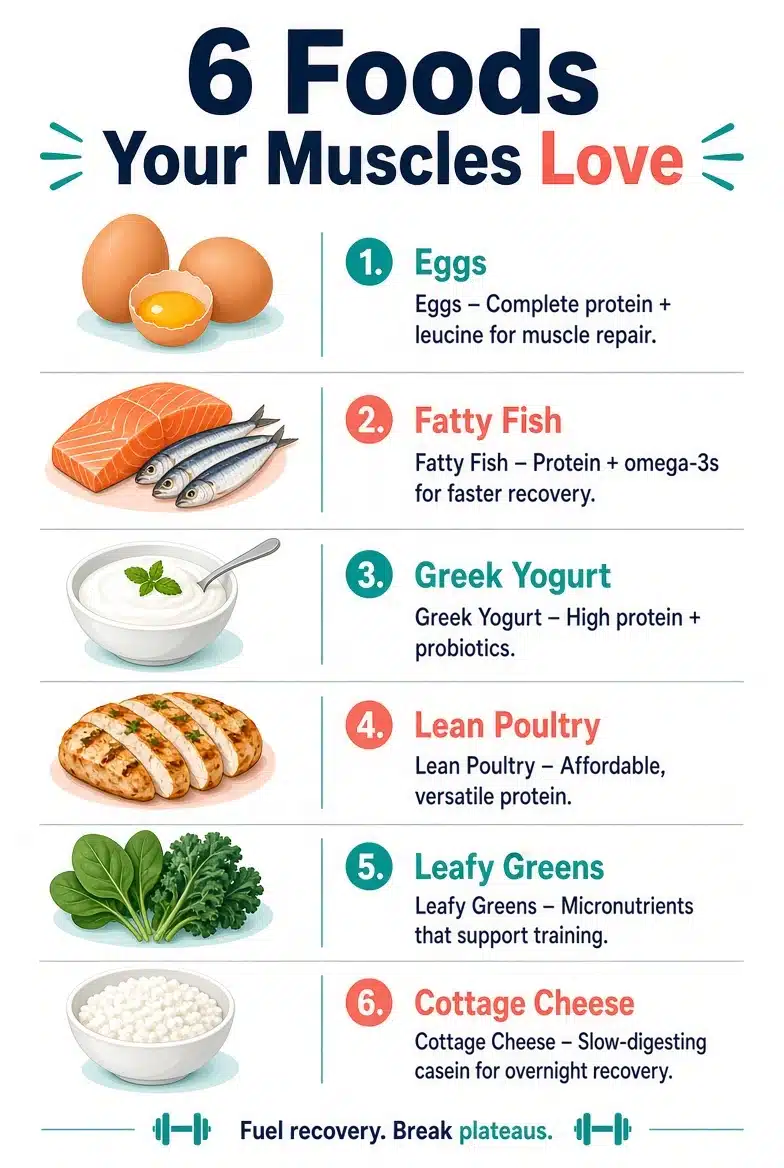
Each one addresses a common gap: insufficient protein distribution, poor recovery nutrition, or missing micronutrients that keep progress moving.
These foods for muscle growth work best when eaten consistently rather than perfectly. Aim for two to three of them most days rather than forcing all six into every meal.
Why These Foods Are Trending
Search interest in muscle recovery and practical nutrition has risen because more people train at home or in crowded gyms with limited recovery time. Social media highlights progressive overload and complicated routines, yet many lifters still plateau due to under-eating protein or poor food choices.
These six foods stand out for three reasons:
- They require almost no advanced cooking skills.
- They pair easily with existing meals.
- They deliver measurable benefits for recovery without expensive supplements as the first step.
People who previously relied solely on protein shakes are adding whole-food sources to improve satiety, micronutrient intake, and long-term adherence. The shift is practical rather than trendy.
Pros and Cons of Focusing on These Foods
Pros
- High protein density supports muscle protein synthesis.
- Most options are widely available and relatively affordable.
- Easy to prepare in bulk or with minimal effort.
- Provide recovery nutrients (omega-3s, antioxidants, slow proteins) that pure whey often lacks.
- Help break plateaus caused by inconsistent daily protein intake.
Cons
- Some options (such as fatty fish and quality Greek yogurt) can cost more than basic staples.
- Eggs and dairy may not suit people with allergies or strong preferences.
- Relying solely on these foods without tracking overall calories and protein can still limit results.
- Fresh greens spoil faster than packaged alternatives if not used promptly.
The trade-off is clear: these foods give better recovery support than random eating, yet they still require basic planning. They are not magic. They remove common nutritional bottlenecks.
Who Should Consider These Foods
This approach fits the intermediate lifter who:
- Trains 3–5 times per week with progressive overload but sees stalled size or strength.
- Has limited time for meal prep and cannot spend hours cooking.
- Already eats “pretty healthy,” yet still underconsumes protein throughout the day.
- Wants food-first solutions before adding more supplements.
- Experiences delayed recovery or joint discomfort after harder sessions.
It is less ideal for complete beginners who still need to learn basic training consistency, or for advanced athletes who already track macros precisely and use specialized protocols.
If your main barrier is time and confusion about what to eat after training, these six foods provide clear guidance.
The 6 Foods in Detail + How to Use Them
1. Eggs
Eggs provide one of the highest biological-value proteins available. The yolk contains fats and
micronutrients that support hormone production, while the white delivers pure protein.
Quick use: Scramble 3–4 eggs with spinach for a fast post-workout or breakfast meal. Hard-boil a dozen on Sunday for grab-and-go protein.
Action step: Add two eggs to whatever you already eat in the morning for the next week.
2. Fatty Fish (Salmon or Sardines)
Salmon and sardines supply complete protein plus EPA and DHA omega-3s. These fats help manage training-related inflammation and support recovery.
Quick use: Bake a salmon fillet with simple seasoning. Keep canned sardines for days when cooking feels impossible—eat them on whole-grain crackers or mixed into a salad.
Action step: Include fatty fish twice this week. Canned versions remove the prep barrier.
3. Greek Yogurt
Plain Greek yogurt delivers 15–20 grams of protein per serving with minimal sugar. It also provides probiotics and calcium that support overall training adaptation.
Quick use: Mix a cup with berries and a scoop of protein powder if needed, or eat it plain with a drizzle of honey after training.
Action step: Replace one afternoon snack with Greek yogurt for the next five days.
4. Lean Poultry (Chicken or Turkey)
Chicken breast and turkey remain among the most cost-effective high-protein foods. They are flavour-neutral and work in almost any meal.
Quick use: Roast a tray of chicken thighs or breasts once or twice a week. Slice and portion for the fridge. Use leftovers in wraps, salads, or quick stir-fries.
Action step: Prep 1–1.5 kg of chicken this weekend. You will thank yourself mid-week.
5. Leafy Greens (Spinach or Kale)
Greens supply magnesium, potassium, vitamin K, and antioxidants. These micronutrients support muscle function, recovery, and overall training capacity even though they are low in calories.
Quick use: Throw a large handful of spinach into eggs, smoothies, or the last minutes of a stir-fry. Kale works well massaged with olive oil or roasted.
Action step: Add one large handful of greens to one meal every day this week
6. Cottage Cheese
Cottage cheese is rich in casein, a slow-digesting protein ideal before bed. It supports overnight muscle protein synthesis when many people otherwise go long hours without protein.
Quick use: Eat a bowl with cinnamon or fruit in the evening. Low-fat or full-fat both work depending on your calorie needs.
Action step: Have cottage cheese as your last protein source three nights this week.
Practical Getting-Started Plan
You do not need all six every day. Focus on consistency with two or three.
Simple weekly template:
- Breakfast: Eggs + spinach
- Lunch or dinner: Chicken or turkey + greens
- Snack or evening: Greek yogurt or cottage cheese
- 2× per week: Fatty fish
This pattern covers high-quality protein distribution across the day—one of the biggest levers for muscle growth when training is already in place.
Time-saving tips
- Buy pre-washed greens.
- Use canned fish on busy days.
- Cook protein in bulk twice a week.
- Always keep Greek yogurt and cottage cheese stocked.
If you want even less decision-making, many people pair these whole foods with a high-quality protein powder for days when solid food is inconvenient.
Where to Buy and How to Stock Your Kitchen
- Eggs: any brand, preferably pasture-raised if budget allows
- Salmon or sardines: fresh when on sale, otherwise canned in water or olive oil
- Greek yogurt: plain, full-fat or low-fat depending on calories
- Chicken/turkey: family packs for better value
- Spinach/kale: pre-washed bags or frozen for longevity
- Cottage cheese: plain varieties with higher protein content
Shop once or twice a week and keep the list short. The goal is to reduce friction, not to create a perfect pantry.
Start this week with just eggs, Greek yogurt, and chicken. Add the others once those become automatic.
Conclusion
Muscle growth stalls for many people not because of the program, but because recovery nutrition stays inconsistent. These six foods—eggs, fatty fish, Greek yogurt, lean poultry, leafy greens, and cottage cheese—directly address common gaps in protein quality, recovery nutrients, and daily practicality.
You do not need complicated recipes or hours in the kitchen. You need reliable protein sources distributed across the day and a few recovery-supporting nutrients that most people under-eat.
Pick two foods from the list and use them daily for the next seven days. Track how your recovery and energy feel. Then expand from there.
Consistent training plus better food choices beat perfect training with poor nutrition every time. Your muscles respond to what you feed them after the work is done. Start feeding them what they actually use.